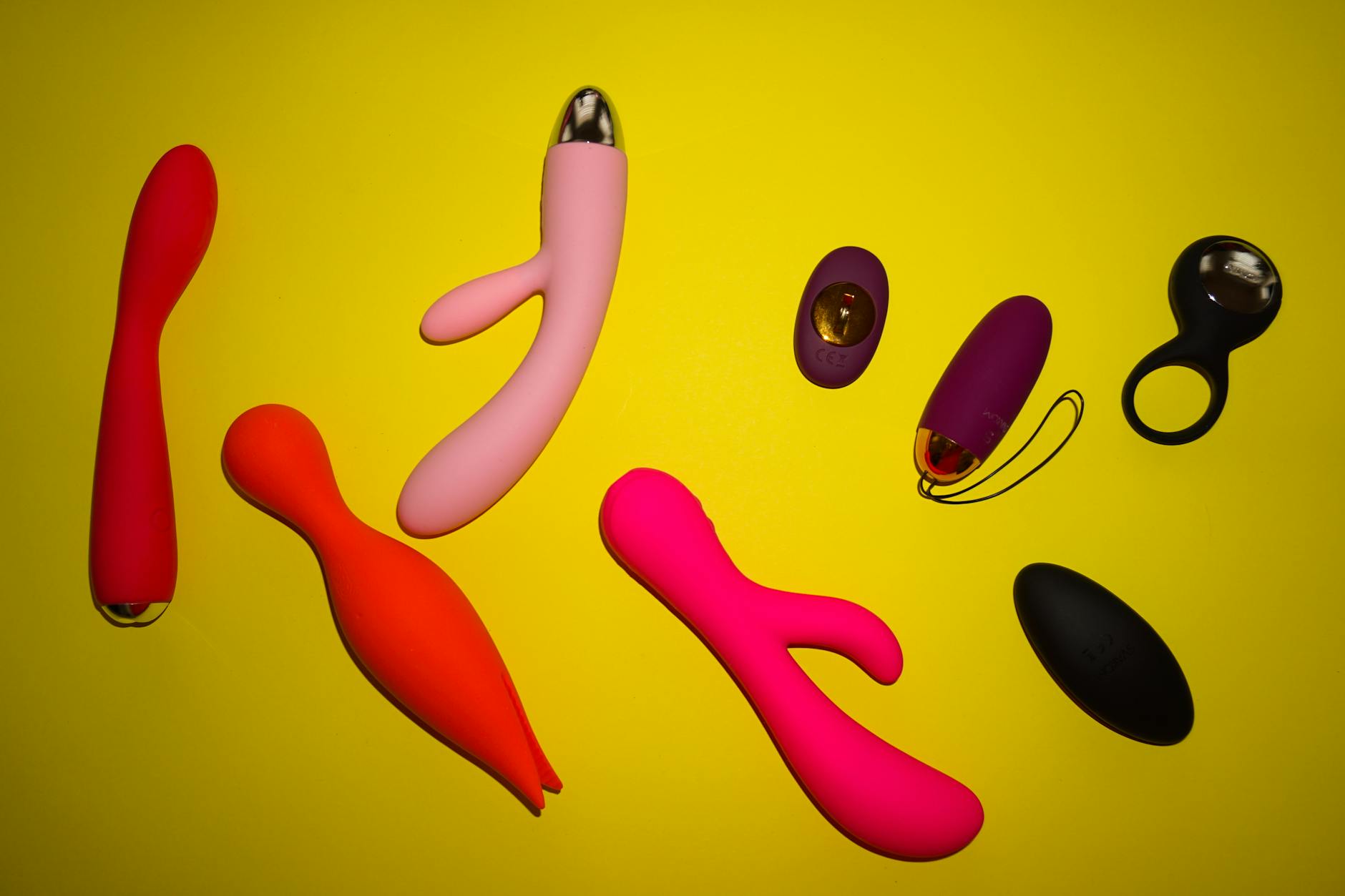
Let's be real about what changes when they're in the room
A lemon vibrator feels wildly different when you're alone versus when you're with a partner. It's not your imagination. The arousal pathway is the same biologically, but the emotional context, the attention, and honestly the pressure you're putting on yourself all shift. Understanding those differences is the key to actually enjoying a lemon clitoral vibrator as a shared tool instead of feeling like you're performing.
Here's what I see in my practice: couples introduce a vibrator with the best intentions, and within two minutes it becomes awkward because nobody talked about what changes when a second person is present. Let's fix that.
What your nervous system actually does differently
When you're alone, your attention lives entirely inside your body. When someone else is there, even if they're being supportive and patient, part of your brain splits off to monitor them. Are they enjoying watching? Am I taking too long? Do they think this is weird? That observer voice is mild, but it's there. And it absolutely changes how sensation registers.
This isn't a flaw in you or your relationship. It's neurobiology. Your prefrontal cortex, the part that thinks and worries, has to share resources with your limbic system, the part that feels pleasure. Solo, your limbic system can go quiet and take over. With a partner, that division of attention is real.
The practical upshot: arousal often takes longer with a partner present, and the pathway to orgasm is rarely the same as when you're flying solo. Some people need more build-up. Some need less intensity because the emotional stimulation is already doing work. Some actually find they don't orgasm at all, and that's okay if the pleasure is still there.
How presence changes what a lemon vibrator can do
When you're solo with a lemon sucker or any clitoral vibrator, you're controlling the entire experience. Speed, pressure, angle, duration. You know exactly how your body responds, and you can adjust in real time without explanation.
With a partner, that control fractures. If they're holding the vibrator, they're guessing about pressure. If you're holding it and they're watching, you might shift intensity because you want to give them something to see. If you're both in the moment together, there's an inherent negotiation happening that wasn't there before.
That negotiation is not bad. It's actually where couples find new pleasure. But it requires acknowledging that the sensation won't be identical to solo use.
The three most common shifts (and what to do about them)
Shift 1: Slower arousal, but deeper sensation. Many people find that with a partner, their body takes longer to warm up but the eventual orgasm (if it happens) feels more full-bodied. This is because you're aroused by multiple inputs at once. The touch, the presence, the emotional connection, and the vibrator are all working together.
How to work with it: Don't rush. Plan for 20-30 minutes if you're new to using a lemon clitoral vibrator together. Start with low intensity and work up. Talk beforehand about the fact that this might not end in orgasm, and that's genuinely fine. Some of the best partnered vibrator use is foreplay that goes nowhere fast and both people are happy.
Shift 2: The performance pressure is real, and it kills sensation. You can't enjoy a lemon vibrator if you're worried you're taking too long or not reacting the right way. This one destroys couples because they don't name it. One person thinks the other person doesn't like it. Actually, the other person is just stuck in their head.
How to work with it: Before you ever use a clitoral vibrator together, agree that feedback is separate from performance. "That feels amazing" is different from "are you close." The first is about sensation. The second is about outcome. Focus on sensation in the moment. Orgasm is a bonus, not the assignment.
Shift 3: Comparison to solo sensation causes doubt. You know exactly how it feels when you use a lemon vibrator alone. Then your partner uses it on you and it feels different, and part of your brain says, "I'm broken" or "they're doing it wrong." Neither is true. It's just a different context producing a different sensation.
How to work with it: Tell them what you're experiencing. "That pressure is slightly higher than I usually go" or "I need you to stay in one spot longer." Direct feedback is not criticism. It's information. Most partners actually want to know.
The psychological piece nobody mentions
There's a difference between using a lemon sexual toy alone and using it with someone watching or participating. Alone, you can fully surrender to sensation without self-consciousness. With a partner, there's a tiny thread of awareness that you're being witnessed, that your pleasure is part of their experience too.
This isn't wrong. Some people find that thread intensely erotic. Some people find it makes it harder to let go. Both are normal.
The key is knowing which one you are before you start. If you're someone who needs complete privacy and zero observation to relax into pleasure, a partner being present while you use a lemon clitoral vibrator might not work. And that's useful information about what you actually need in intimate moments.
If you're someone who actually likes being watched or who gets aroused by a partner's engagement, then a shared vibrator experience can be genuinely transformative. You're getting the mechanical pleasure of the vibrator plus the emotional pleasure of being seen and desired.
How to talk about it without killing the mood
Here's what doesn't work: trying to have this conversation in the moment. Vibrator is in hand, clothes are off, and you try to discuss what each person needs. That's a recipe for awkwardness.
Here's what works: talk about it during a normal, clothed, non-sexual moment. "I want to try using a vibrator together. I'm curious how it will feel different from when I use it alone. I want to make sure we both actually enjoy it instead of just trying to make it work."
From there, you can ask: Do you want to watch me, or do you want to use it on me? Do you want me to give you feedback while we're going, or would you rather I wait until after? What if this doesn't lead to an orgasm? Are we cool with that?
These aren't romantic questions. But they make the actual experience way more romantic because nobody's anxious.
When to use a lemon vibrator together versus keeping it solo
Solo use stays powerful and doesn't need defending. You know your body best. Your orgasm is fastest and often easiest when you're alone. That's real and valuable.
Shared use works best when the goal is connection, not outcome. When you want your partner to be part of your pleasure in a way they usually aren't. When you're curious about sensation together rather than trying to fix something.
If one person wants to use a vibrator and the other is hesitant, that's a conversation, not an argument. You might explore how to introduce a lemon vibrator with a new partner before jumping into shared use. Some couples need more trust built first.
If you're in a long-term relationship and want to deepen intimacy, a lemon clitoral vibrator can do that. But it's a tool for connection, not a magic fix for disconnection. If the relationship stuff is shaky, the vibrator experience will be shaky too.
The unexpected benefit: learning your partner's attention
One thing I see happen, and it's always surprising to couples, is that using a vibrator together teaches you how your partner pays attention. Are they watching your face? Are they checking in with you? Are they getting bored? Are they fully engaged? You learn their attention style, and that's actually intimate information.
Some partners are fully locked in on your pleasure. Some are thinking about themselves. Some are in their head. None of this is judgment. It's data. And that data can inform the bigger conversation about intimacy and care in your relationship.
FAQ: What couples actually ask about lemon vibrators
Can both partners use the same lemon vibrator at the same time?
Yes, depending on the design. Most lemon clitoral vibrators are small enough that two people can hold it together or take turns with direct contact. If you're both touch-sensitive, external stimulation only works. If one partner has internal interest too, you might want multiple devices. Talk about it beforehand instead of figuring it out with the vibrator in hand.
What if my partner wants to use the vibrator on me and I feel self-conscious?
That's the most common hesitation, and it's worth taking seriously. Self-consciousness kills pleasure. If being watched makes you freeze up, tell your partner. There's no shame in that. Some people find being watched eventually becomes less scary the more it happens. Some people never want it, and that's fine. Respect your actual comfort, not what you think you should be comfortable with.
Does using a vibrator together mean he's not enough?
No. A vibrator does a specific thing. A partner does a million other things. They're not in competition. If your partner sees a vibrator as a threat to their adequacy, that's actually a relationship conversation that has nothing to do with the vibrator. You might consider working with a therapist on that one.
Should we always use a vibrator together now?
Absolutely not. Solo vibrator use stays powerful. Some of the best vibrator experiences are private. Shared use is one tool in the toolkit. Knowing when to deploy it and when to keep it solo is part of the skill.
Can a lemon vibrator help with couples who are drifting apart?
It can be part of reconnecting, but it's not the solution to disconnection. If you're drifting, the vibrator might feel awkward or forced because the real issue is unaddressed. Address the real issue first. If the foundation is solid and you just want to explore more together, then yes, a clitoral vibrator can add a dimension to shared pleasure.
How do I know if my partner will be into it?
You ask. Not in a sexual moment. In a regular conversation. "I've been curious about trying a vibrator together. How do you feel about that?" Most partners either say yes or say "let me think about it." Both are honest answers. If they say no, that's information. Don't push.
The bottom line
A lemon vibrator feels different with a partner because everything feels different with a partner. The pleasure pathway changes. The attention divides. The safety you feel has to expand to include another person. That's not worse. It's different, and different can be really good if you approach it with honesty instead of expectation.
The couples I work with who actually enjoy vibrators together are the ones who talked about it first. Who checked in during. Who didn't expect it to be like solo use. Who saw it as a tool for closeness, not a performance metric.
That's available to you too. Start with the conversation. The rest follows.