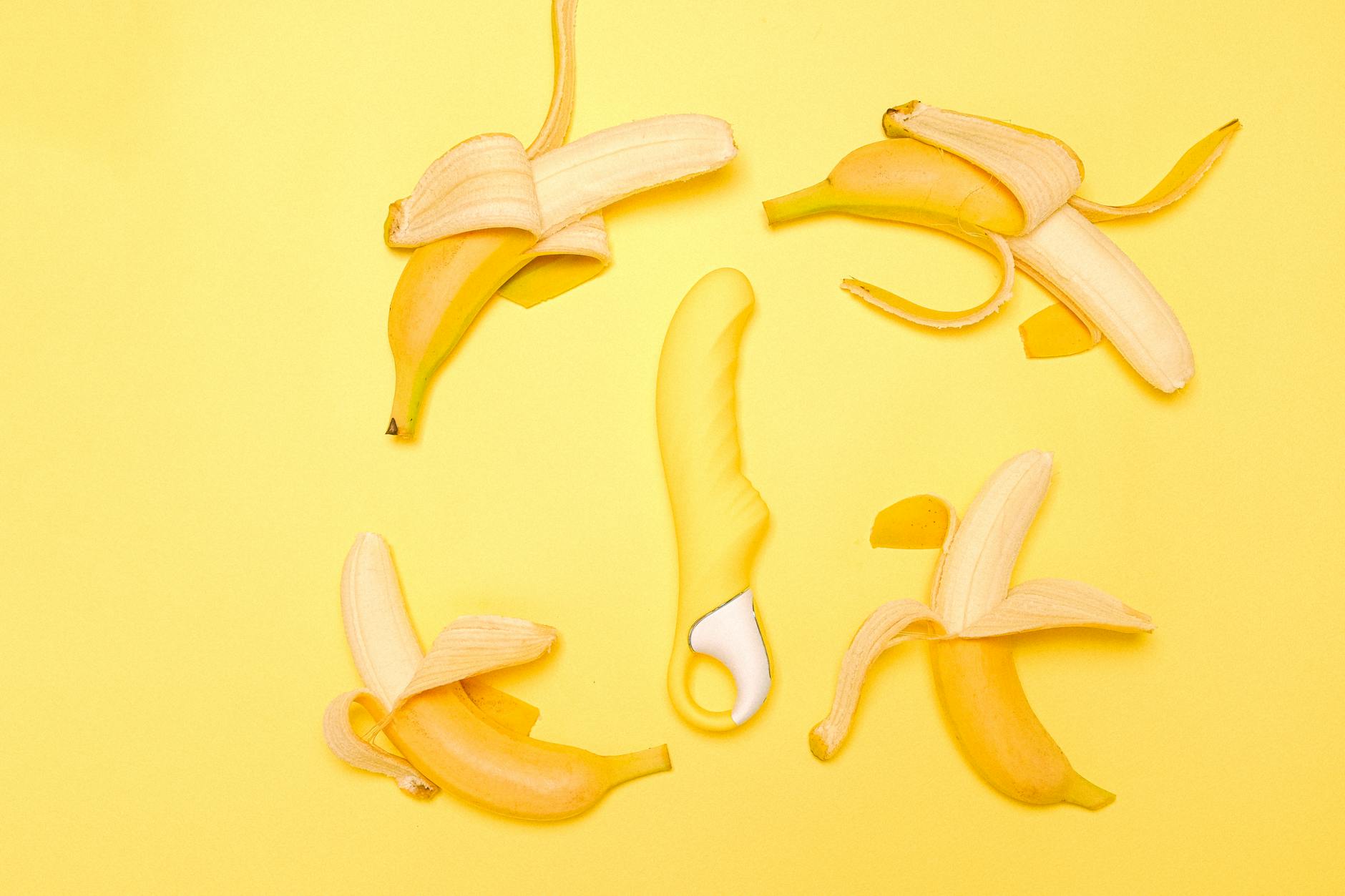
Here's what nobody tells you about pleasure after a breakup
Your body doesn't just remember your partner. It remembers the rhythm, the touch, the anticipation, the safety. When that person is gone, pleasure doesn't simply resume where it left off. It feels muted, strange, almost foreign. You might reach for a lemon vibrator or another favorite toy and feel almost nothing. Or you might feel too much, too fast, in ways that catch you off guard. Both are completely normal. Both are your nervous system recalibrating.
Long-term relationships rewire how your body processes pleasure. The pathways that activate during sex with a trusted partner are different from the ones you activate alone. Rewiring them takes time, but it also takes intention. And it takes the right tools.
What happens neurologically when a relationship ends
When you've been intimate with the same person for years, your brain builds a specific map. Your partner's touch, their rhythm, the patterns you've created together all become encoded in your sensory and motor cortex. You don't have to think about it anymore. Your body just knows what's coming.
When that relationship ends, those neural pathways are still there. But they're no longer being reinforced. At the same time, your nervous system goes into a different state. You're processing grief, loss, possibly anxiety about being touched by someone new (or even being alone). The sympathetic nervous system (the fight-or-flight response) can become hyperactive, which makes genuine relaxation during pleasure much harder.
Add oxytocin withdrawal into the mix. During regular sex with a partner, your brain floods with oxytocin, the bonding hormone. When that disappears, you're essentially in a low state. Dopamine, which drives motivation and reward, can take a hit too. This isn't depression necessarily. It's neurochemistry. And it's real.
Why lemon vibrators feel strange at first
If you used a lemon clitoral vibrator (or any vibrator) while you were partnered, you might have used it a certain way. Maybe your partner was involved. Maybe you used it in a particular mindset. Maybe it was part of a specific ritual. When you come back to it solo, after the relationship has ended, three things change:
Your body's baseline arousal is lower. Without the neurochemical input from a partner, your body needs more time and more direct stimulation to reach the same state. That lemon sucker that used to work on pattern three might require pattern five or six now. This isn't a defect. It's a signal that you need to adjust expectations.
Your mind is in a different place. Grief, anger, loneliness, or even just the strangeness of being alone in that space can pull you out of arousal. The lemon vibrator isn't the problem. Your attention is. This is why starting slow matters so much. You're not just relearning your body. You're relearning what it feels like to be present in your body without another person there to anchor you.
Muscle memory is confused. If you always came from a specific position or angle with your partner, your pelvic floor might tense up when you try something different. The clitoral tissue needs new patterns to recognize and trust. This takes repetition, patience, and the right stimulation. The Lem's suction pattern can actually help here because it's different enough from a partner's touch that it creates a new neural pathway rather than trying to replicate an old one.
How to reintroduce pleasure with a lemon vibrator
Think of this like rebuilding trust, because that's what it is.
Start without expectation of orgasm. Seriously. For the first few sessions, use your lemon clitoral vibrator on the lowest setting with the singular goal of noticing sensation. Not coming. Not feeling good. Just feeling. This shifts your nervous system from goal-oriented (which triggers anxiety) to exploratory (which activates the parasympathetic nervous system, the rest-and-digest response). Set a timer for 10-15 minutes. When it goes off, you're done. No performance required.
Use lubricant even if you think you don't need it. After a breakup, arousal can take longer to build, and your natural lubrication might be lower due to stress. Water-based lube removes the friction between your body and the toy, which means you can feel the vibration more clearly. This sounds counterintuitive, but less resistance actually equals more sensation. The lube acts like a conductor.
Create a different environment than you used before. If you and your partner always used the lemon vibrator in your bedroom at night, try the bathroom. Try it in the morning. Use different music or no music. Light candles instead of darkness, or vice versa. You're literally building new associations. New context helps your nervous system recognize this as a different experience from what you had before.
Map your clitoris like you're meeting it for the first time. The clitoral network extends deeper than most people realize. When you've been focused on partnered sex, you might not have explored the full anatomy. Try the lemon sucker at different angles. Try it directly on the clitoris, then try it on the mons pubis above it, then on the labia. You might find that you prefer stimulation in places you never focused on before. This isn't because your body changed. It's because you're actually paying attention to it.
The emotional piece that most articles skip
Here's the part that changes everything: you have to feel your feelings while you're doing this.
If you start using a lemon vibrator and you get sad, stop and let yourself be sad. If you get angry, sit with it. If you feel nothing and it freaks you out, that's information too. Many people try to force pleasure as a way to prove they're "over it" or to escape the breakup entirely. But pleasure doesn't work that way. Your body won't let you bypass grief with an orgasm, no matter how good the vibrator is.
This is where the mental work matters. If you're solo with a lemon clitoral vibrator and you're spiraling into thoughts about your ex, that's your cue to pause. Breathe. Maybe journal for five minutes about what came up. Then come back to the toy if you want to. You're not trying to force pleasure. You're relearning what it feels like to be in your body without another person defining that experience for you.
When to expect pleasure to return
There's no fixed timeline. Some people reconnect with pleasure within weeks. Others take months. The variable isn't how much you loved your ex. It's how much nervous system dysregulation the breakup created, your personal trauma history, and how much intentional practice you're putting in.
What I've observed with clients is this: pleasure usually returns not when you stop thinking about your ex, but when you stop trying to replicate what you had with them. When you stop judging the new experience against the old one. The lemon vibrator will feel different than it did before. That's not worse. It's just different. And different can actually be better, because it's yours alone now.
Why the Lem works particularly well during this transition
The suction mechanism is different enough from a partner's touch that it doesn't trigger the same muscle memory as a traditional vibrator would. You're not trying to recreate something familiar. You're exploring something new. The rhythmic pulsing also requires less mental effort to stay present with, which means your nervous system can relax into it rather than grip it. And that, finally, is when real pleasure becomes possible.
Your body didn't forget how to feel good. It just needed permission to feel good in a new way.
FAQ
Why does my lemon vibrator feel numb compared to how it felt with my partner?
Partner-partnered arousal activates multiple sensory channels at once (touch, sight, sound, smell, emotional connection). Solo arousal activates fewer channels. Your nervous system isn't comparing. Your brain is. You've gone from a rich sensory experience to a simpler one, so the toy feels less intense. This isn't the vibrator's fault. It's actually a sign your body is being honest about what it's getting. Patience and repetition rebuild the neural pathways, and sensation will deepen.
Is it normal to feel grief or sadness while using a lemon clitoral vibrator after a breakup?
Completely. Pleasure and emotional pain can overlap, especially in the months after a relationship ends. The intimacy space you shared is now just your space. Your body notices that absence. Rather than pushing through it, acknowledge it. Pause the toy, feel what needs to be felt, and come back if you want to. You're not broken. You're processing.
How long should I wait after a breakup before using a vibrator again?
There's no rule. Some people need days. Some need months. The question to ask is: am I using this to escape or to reconnect? If you're using it to numb out, you might not be ready. If you're using it as a curiosity or as part of rebuilding your relationship with your own body, go ahead. The lemon vibrator isn't a deadline. It's a tool available whenever you want it.
Why do I need more pressure or intensity from my lemon vibrator now than I did before?
Several things happen neurologically after a breakup. Your nervous system is in a different state. Arousal takes longer to build because you're not getting the neurochemical input from a partner. And stress hormones (cortisol, adrenaline) can dull sensation overall. The intensity isn't actually higher. Your ability to feel subtle sensation is lower. This usually resolves over time as your nervous system settles. In the meantime, higher settings or longer warm-up periods help.
Can using a vibrator help me move on faster from my ex?
Not directly. But reconnecting with solo pleasure can help you reclaim your body as your own space rather than a space defined by your relationship. That reclamation is part of moving forward. The vibrator is a tool for that process, not a shortcut through it. You still have to feel the feelings. The pleasure just reminds you that there's life and sensation available on the other side.
Is it weird to feel more pleasure from a vibrator alone than I did with my partner sometimes?
Not weird at all. In a long-term relationship, you might adapt your arousal to fit your partner's rhythm or preferences. Alone, you can chase exactly what your body wants. The lemon sucker doesn't have needs or a timeline. You can spend as much time as you need on your own pleasure. That freedom often feels revelatory. Some people discover they actually prefer solo pleasure. That's valuable information, and it's okay.
Rebounding sexually after a long-term relationship isn't about jumping back into pleasure as quickly as possible. It's about slowly, steadily rebuilding trust in your own body. A lemon vibrator is excellent for this because it's consistent, it's yours, and it asks nothing of you except presence. The sensation might feel muted at first. But that's not the vibrator failing. That's your nervous system signaling that it needs time to recalibrate. Give it that time. The pleasure will return, and when it does, it'll feel like discovering it for the first time.