Let's talk about what long-term partnership does to your body
After years or decades with a partner, your nervous system isn't wired for solo sensation anymore. This sounds dramatic, but it's not metaphorical. When you've spent 5, 10, 20 years having sex with the same person in roughly the same way, your body learns what to expect. It anticipates their rhythm, their pressure, their presence. And then you're alone with a lemon clitoral vibrator and it feels weirdly wrong.
That's not a sign you're broken. It's actually the opposite. You're experiencing a nervous system that's been trained for connection, suddenly faced with a different kind of stimulation. And your body needs permission to learn something new.
How couplehood rewires your pleasure response
Here's the neuroscience part without the jargon. When you have sex with a partner regularly, your brain builds neural pathways around their specific touch, timing, and presence. You're not just experiencing physical sensation. You're experiencing it through the lens of anticipation, emotional safety with this particular person, and a rhythm you've both developed over time.
This is actually beautiful. It's called sexual conditioning, and it deepens intimacy. But it also means your clitoris has learned to respond to a very specific type of stimulation in a very specific context.
Then you pick up a lemon vibrator solo and your nervous system says, "Wait. This is different. Where's the other person? Why is the pressure like this? This isn't what I'm programmed for."
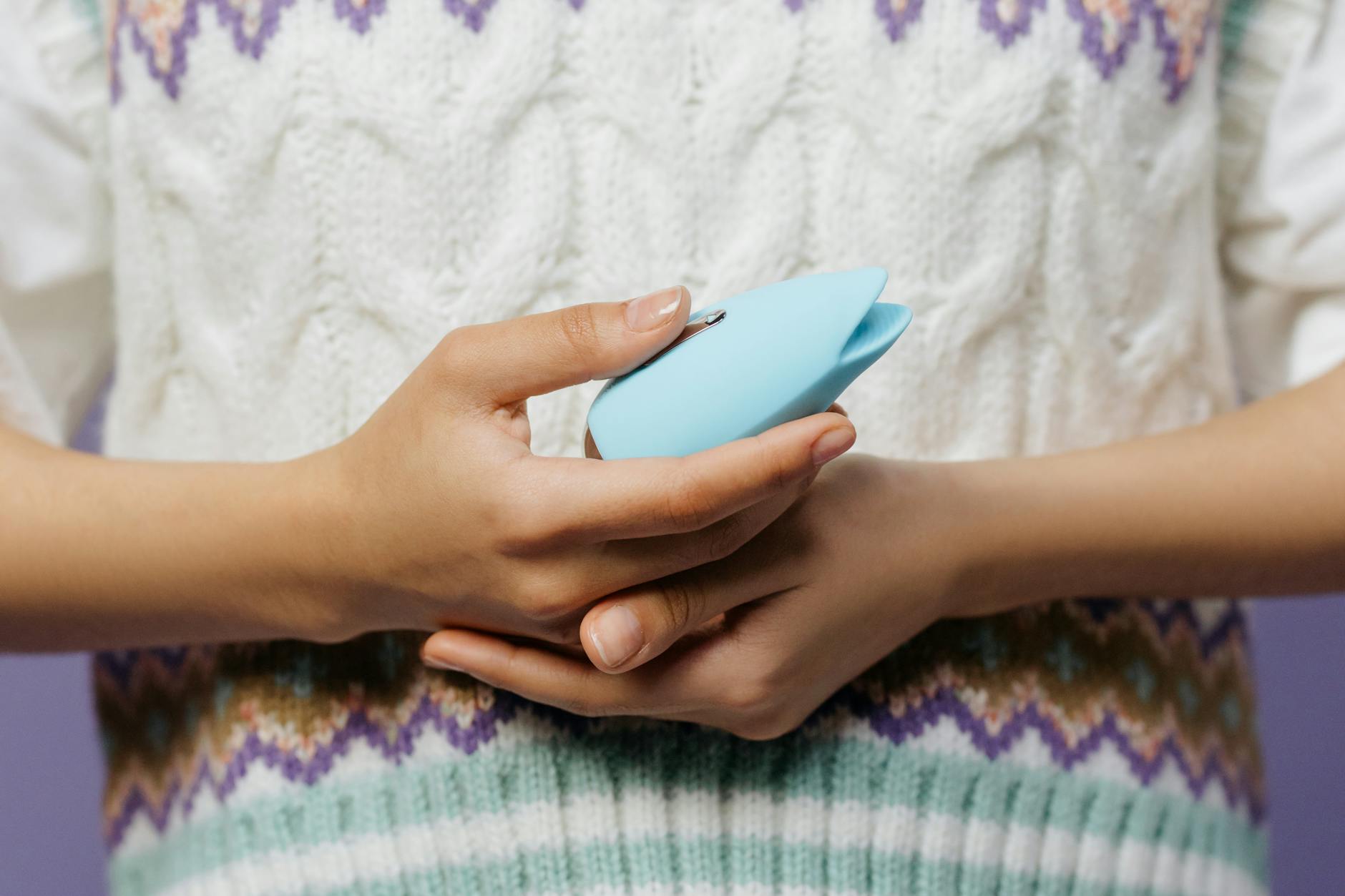 Photo by cottonbro studio on Pexels
The sensation gap between partnered and solo
Three things shift when you move from couple sex to solo play with a lemon sucker vibrator.
First, there's no anticipation of someone else's pleasure. With a partner, part of your arousal is responsive. You're tracking their breathing, their sounds, their timing. When you're alone, that entire sensory channel goes quiet. Your nervous system is used to processing information on two channels. Suddenly there's only one.
Second, you're not coordinating. Partnered sex, even really good partnered sex, involves compromise. The angle that works for them, the speed they prefer, the way you fit together. Solo play has zero compromise. It's only what your body wants. This sounds like it should be easier. Often it's actually more confusing because you're not used to making that choice.
Third, the emotional context is completely different. Sex with a partner involves vulnerability with someone who knows you. Solo play involves vulnerability with yourself, which feels harder in a weird way. You don't have their presence to anchor you.
All three of these things mean that even an excellent clitoral vibrator like the Lem can feel strange at first, even if it would feel amazing on someone you'd been with for years.
Why the Lem vibrator feels so different solo
Air-suction toys like the Lem work through gentle suction and pulsation, not direct vibration. This means they stimulate your clitoris without the kind of intense friction you might be used to in partnered sex. In a couple, you might have control over that friction through positioning, angle, and movement. Solo, the toy has one job. It does what it does.
For people coming out of long-term partnerships, this specificity is actually an advantage, even if it feels weird at first. The Lem removes the guesswork. You're not negotiating sensation. You're just receiving it.
But your body still has to learn that this kind of stimulation is good. Your nervous system has to rewire slightly. And that takes repetition and patience.
How to actually use a lemon clitoral vibrator after years with a partner
Three concrete things that help:
Start with low expectations. The first time you use a lemon vibrator solo after years in a partnership, the goal isn't orgasm. It's sensation. It's noticing. It's permission to just feel different input and be curious about it without judgment.
Use it when you're alone and actually want to. Not when you think you should. Not because the vibrator is sitting there. Some people need weeks of just holding it, turning it on for 30 seconds, getting used to the hum. That's fine. That's actually really important.
Don't compare it to partnered sex. This is the big one. Partnered sex is one thing. Solo play with a clitoral vibrator is a completely different thing. It's not better or worse. It's its own experience. Your body will find that out faster if you stop expecting it to feel familiar.
What changes about sensation over time
After a few weeks of solo play with a lemon sucker vibrator, something shifts. Your nervous system stops treating this as "the thing that isn't my partner" and starts treating it as "a different kind of pleasure I'm choosing for myself."
This is when people report that sensations actually start to deepen. The suction feels less strange and more focused. The patterns become easier to explore. You stop anticipating someone else's touch because you're just present with your own.
Many of my clients describe this as almost meditative. When there's no one to perform for, no one to coordinate with, no one else's pleasure to track, something in the nervous system finally relaxes. And that relaxation is when real pleasure shows up.
The emotional part that nobody talks about
Using a lemon vibrator solo after a long-term partnership can also bring up some feelings. Sometimes that's loneliness. Sometimes it's liberation. Sometimes it's both at the same time.
Long-term partnerships feel normal. Solo pleasure can feel transgressive or selfish or sad, depending on why you're doing it. If you're using a clitoral vibrator because a relationship ended, there might be grief underneath. If you're using it because your partner is away or your sex life has stalled, there might be frustration.
None of those feelings mean you're doing it wrong. They mean your nervous system is processing a lot. Solo pleasure is actually one of the best ways to reclaim agency in your own body. But it helps to know that emotionally, not just physically.
When to go back to partnered play
Solo use of lemon vibrators and adult toys isn't a replacement for partnered sex. It's an addition. It's a way to stay connected to your own pleasure in a different way.
Some people use solo play with a clitoral vibrator as a bridge. They practice receiving sensation in a context where they're not also managing a partner's experience. Then they bring that knowledge back to couple sex. They know what their body wants because they've spent time alone with it.
Others use solo play as maintenance. A way to stay in touch with their own nervous system and pleasure response, which actually makes partnered sex better.
They're not mutually exclusive. Your body can learn to respond to both.
FAQ
Why does a lemon vibrator feel numb or distant after long-term partnered sex?
Your nervous system has been conditioned for a different type of touch over years. The sensation input from a clitoral vibrator is completely different from partnered friction. This isn't numbness. It's your body being genuinely confused about what's happening. Give it time and repetition. After a few weeks, most people report that sensation actually deepens because they're not divided between their own experience and their partner's.
Is it normal to feel disconnected or sad using a lemon sucker vibrator alone?
Completely. Long-term partnership becomes neurologically normal. Solo pleasure can bring up loneliness, grief, frustration, or even just the weirdness of being alone with your own body in that way. That doesn't mean stop. It means acknowledge the emotion, breathe through it, and keep going. The reconnection often happens on the other side of that discomfort.
How long does it take to feel comfortable with a lemon clitoral vibrator after years with a partner?
There's no standard timeline. Some people feel comfortable in days. Others need weeks. The key is consistency. Use it when you genuinely want to, even for short sessions. Your nervous system learns through repetition, not intensity. Two minutes a few times a week is more useful than 20 minutes once a month.
Can I use a lemon vibrator with my partner if I've been using it solo?
Absolutely. Solo play actually often improves partnered sex because you know more clearly what your body wants. You're not guessing. You can show your partner exactly what feels good. You can also be clearer about what you're comfortable with and what you're discovering.
Does using a clitoral vibrator solo change how I experience partnered sex?
It might. Some people find they want more focused clitoral stimulation with a partner after they've experienced what a lemon vibrator provides. Others find they appreciate the broader sensation of partnered sex even more because it's different from solo play. There's no right answer. Your body will tell you what it wants.
Should I tell my partner I'm using a lemon vibrator solo?
That depends on your relationship and your comfort level. Some couples find that transparency deepens intimacy. Others prefer to keep solo play private. There's no moral correctness here. What matters is what feels right for you and, if you have a partner, what supports trust and communication between you both.
The real takeaway here
Your body isn't broken. It's just learning a new language. Years with a partner taught your nervous system one kind of pleasure. A lemon clitoral vibrator teaches it another. Both are valid. Both can coexist.
The first time feels strange. That's not a sign to stop. It's a sign that your system is still learning. Stay curious, stay patient, and remember that when you're reconnecting with a partner after time apart, solo exploration can actually deepen that reconnection because you know yourself better.
Your pleasure matters. In coupledom and out of it. Your body deserves to learn new ways to feel good. Give yourself the time.