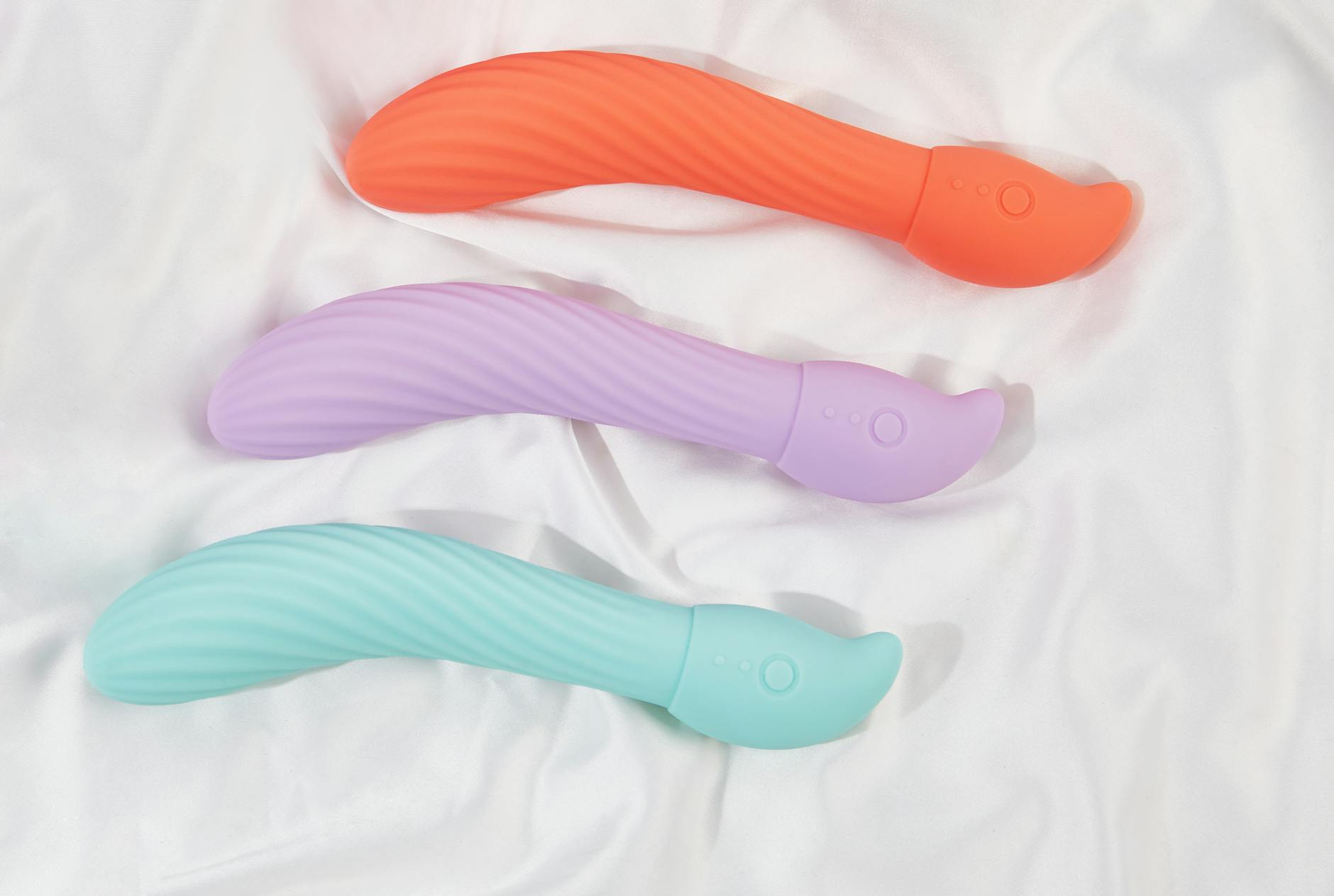
Why Lemon Vibrators Feel Better After You Stop Numbing Your Emotions
Let's be real. You've probably noticed something odd: you buy a new toy, it feels incredible for the first few months, then gradually it stops landing the way it did. You think the toy is broken. You think you're broken. You wonder if you need something stronger, faster, more intense. So you keep chasing.
Here's what's actually happening. Your nervous system is offline.
Not because of anything physical. Because of something emotional.
The connection between stress and sensation
This is not woo. This is neuroscience. When you're stuck in chronic stress, anxiety, or emotional avoidance, your brain does something protective. It down-regulates sensation. It dims the volume on pleasure signals because those signals compete with survival signals, and survival wins.
Think of it like this: if you're living in a state of threat, your body doesn't care about pleasure. It cares about staying safe. So the sensory circuits that light up during arousal get quieter. The vagus nerve, which controls the parasympathetic response (the relaxation that allows pleasure to build), stays in a more defensive posture. Your pelvic floor tightens. Your breathing gets shallow. And stimulation that should feel electric feels dull.
This is why people often tell me they have "numb" sensations after a period of high stress, grief, or relationship conflict. It's not numbness in the medical sense. It's protective numbing. Your nervous system has its hand on the volume knob, turning pleasure way down.
Why emotional walls wreck sensation
Now add emotional disconnection to that. If you're avoiding feelings, keeping a partner at arm's length, or just generally protecting yourself from vulnerability, your nervous system stays in a semi-defensive state. You can't simultaneously be defended against emotion and open to pleasure. They're neurologically opposite states.
When you're defended, your body is guarded. Your attention is fractured. You're monitoring for threat, even if that threat is just "what if I feel too much." That constant micro-vigilance exhausts your capacity for presence, which is the actual currency of pleasure.
Presence is what makes a lemon clitoral vibrator work. Not the technology itself. The technology is just a tool. Your nervous system's willingness to receive is what transforms a tool into an experience.
Many clients come to me saying, "I've tried everything. Air-pulse toys, wand vibrators, lemon suction toys. Nothing works anymore." And when I dig deeper, I find they're also in a stuck relationship, dealing with unprocessed grief, or running on fumes from chronic work stress. The toy isn't the problem. The nervous system state is.
How disconnection looks in real time
Here's what I observe clinically when someone is in an emotionally defended state:
They grip. Their pelvic floor tightens involuntarily instead of learning to relax and receive. They rush. They're trying to "get there" instead of allowing sensation to build. They compare. They're thinking "this should feel better than last time" instead of feeling what's actually happening. They dissociate. They're watching themselves from outside their body instead of inhabiting it. They interrupt themselves. A thought like "am I taking too long" disrupts the nervous system signal before it can deepen.
None of these are character flaws. They're all protective mechanisms. And they're all invisible without awareness.
The frustration comes when someone assumes the solution is a better tool. A faster lemon vibrator. More power. Different pattern settings. When what they actually need is the groundwork. The emotional work that teaches the nervous system it's safe to be present and open.
The reconnection phase
So what actually changes things?
Feeling the feelings first. This is boring advice, but it's true. If you're in a defensive state because of unprocessed grief, relational distance, or chronic stress, pleasure doesn't come back until that nervous system gets permission to downshift. That means feeling the grief. Having the hard conversation. Getting support. Not pushing past it with a stronger vibrator.
Learning to breathe again. Shallow breathing is the nervous system's way of staying vigilant. But deep, slow breathing (especially extending the exhale) activates the parasympathetic nervous system. The rest-and-digest part. That's where pleasure lives. Simple practice: before you use any tool, spend 2-3 minutes breathing in for four counts, out for six. That alone changes sensation.
Rediscovering presence. This sounds like meditation-speak, but it's literal. Can you put your phone away? Can you quiet the planning brain? Can you notice what you actually feel instead of what you think should happen? That's not spiritual. That's the only way the nervous system learns it's safe to stay in pleasure for more than 30 seconds.
Rebuilding trust with your body. If you've been ignoring your body's signals, dismissing pleasure as not a priority, or using sex as a way to avoid intimacy rather than deepen it, reconnection takes time. Your body doesn't trust you again until you prove you're listening. That might mean going slower. Noticing small sensations instead of chasing the big one. Being curious instead of goal-focused.
Why lemon vibrators specifically help
Once that nervous system groundwork is in place, here's why air-pulse toys like lemon clitoral vibrators can feel revelatory for people coming out of a numb phase.
They don't require the same level of direct pressure that traditional vibrators do. So if your tissues are tense and defensive, suction feels gentler on entry. They pulse rather than buzz, which mirrors the nervous system's own signaling pattern more closely. And that coherence between the tool's rhythm and the body's natural rhythm? That's when sensation wakes up. The pulsing also allows for a different kind of building. You're not chasing one intensity level. You're riding waves. That's more conducive to presence than the linear ramp-up of a traditional vibrator.
But here's the key part: the lemon vibrator works better once you've already softened the defensive posture. The tool doesn't create the nervous system shift. It amplifies it, once it's already started.
When to seek support
If you've been in a numb state for months and nothing is changing, that's a sign to talk to someone. A therapist, a somatic practitioner, a relationships specialist. Not because you're broken. Because sometimes the protective mechanism gets so locked in, you need professional help to gently teach the nervous system it can relax again.
And if you're in a relationship and your partner notices the distance, don't wait. The longer disconnection sits, the more defended the nervous system becomes. Early intervention is almost always easier than trying to thaw a deeply frozen state.
The plot twist
Most people think "I need a better toy" when what they actually need is "I need to feel safe again." Once safety comes back, the simplest tool feels amazing. And that's not a story about compromise. That's actually freedom. Because it means pleasure isn't dependent on buying something new or chasing the next thing. It's dependent on presence. And presence is something you already have access to.
Your sensation isn't gone. It's waiting.
FAQ
Can emotional stress really dull physical sensation that much?
Absolutely. The nervous system doesn't separate emotional and physical threat. When you're in chronic stress or emotional avoidance, the body treats it the same way it treats physical danger: it quiets sensation and tightens protection. This is partly why people in high-stress jobs or difficult relationships often report feeling numb during sex. The nervous system has downregulated pleasure circuits to conserve resources for managing threat. Lemon clitoral vibrators can help reawaken sensation, but the nervous system has to feel safe first.
How long does it take to get sensation back after emotional numbing?
It varies. If the numbing is recent and tied to a specific stressor, a few weeks of feeling the feelings and reestablishing presence can shift things noticeably. If it's been years of avoidance or relationship distance, it might take months of consistent attention. The key is consistency, not intensity. Small daily practices (breathing, checking in with sensation, having honest conversations) rebuild nervous system trust faster than occasional "big" sessions.
Is a lemon sucker toy worth it if I'm in an emotionally defensive state?
Not yet. If you're numb, buying a new toy will feel like a workaround. You'll use it, it won't feel like much, and you'll feel worse about yourself. Do the nervous system work first. Have the conversations. Feel the feelings. Then when you come back to pleasure, the tool will actually work. And you'll know the pleasure was real, not just a function of novelty.
Can lemon vibrators help me reconnect with sensation after I've done the emotional work?
Yes. Once your nervous system is starting to downshift from defensive mode, lemon adult toys can be useful because the air-pulse mechanism feels different from traditional vibration. It's gentler, more pulsing, and it can help the nervous system learn that sensation is safe and pleasurable. Think of it as a bridge back, not the destination.
What if the emotional numbing is related to relationship distance?
That's a two-person problem that needs two-person attention. You can't rewire your nervous system alone if your partner is checked out. The reconnection has to happen relationally. That might mean therapy, intentional conversations, or rebuilding physical affection that isn't sexual at first. Sensation comes back when connection comes back. The toy helps once the connection is there.
How do I know if my lack of sensation is emotional or physical?
Physical causes (hormonal changes, medications, tissue changes) usually show up as different sensation but not complete numbness. You might feel things differently, or need more time to warm up. Emotional numbing is usually described as "flat" or "dull" across the board. If you're numb to pleasure but also numb to other things (food doesn't taste good, nothing feels fun, relationships feel distant), that's your sign it's nervous system protection. Talk to your doctor to rule out medical causes first, then address the emotional piece. Often it's both.
The hardest part about pleasure isn't finding the right lemon vibrator or the right technique. It's learning to be present enough to feel anything at all. Once that groundwork is there, sensation rushes back. And that's when tools like Hello Nancy's lemon clitoral vibrators actually do what they're designed to do.