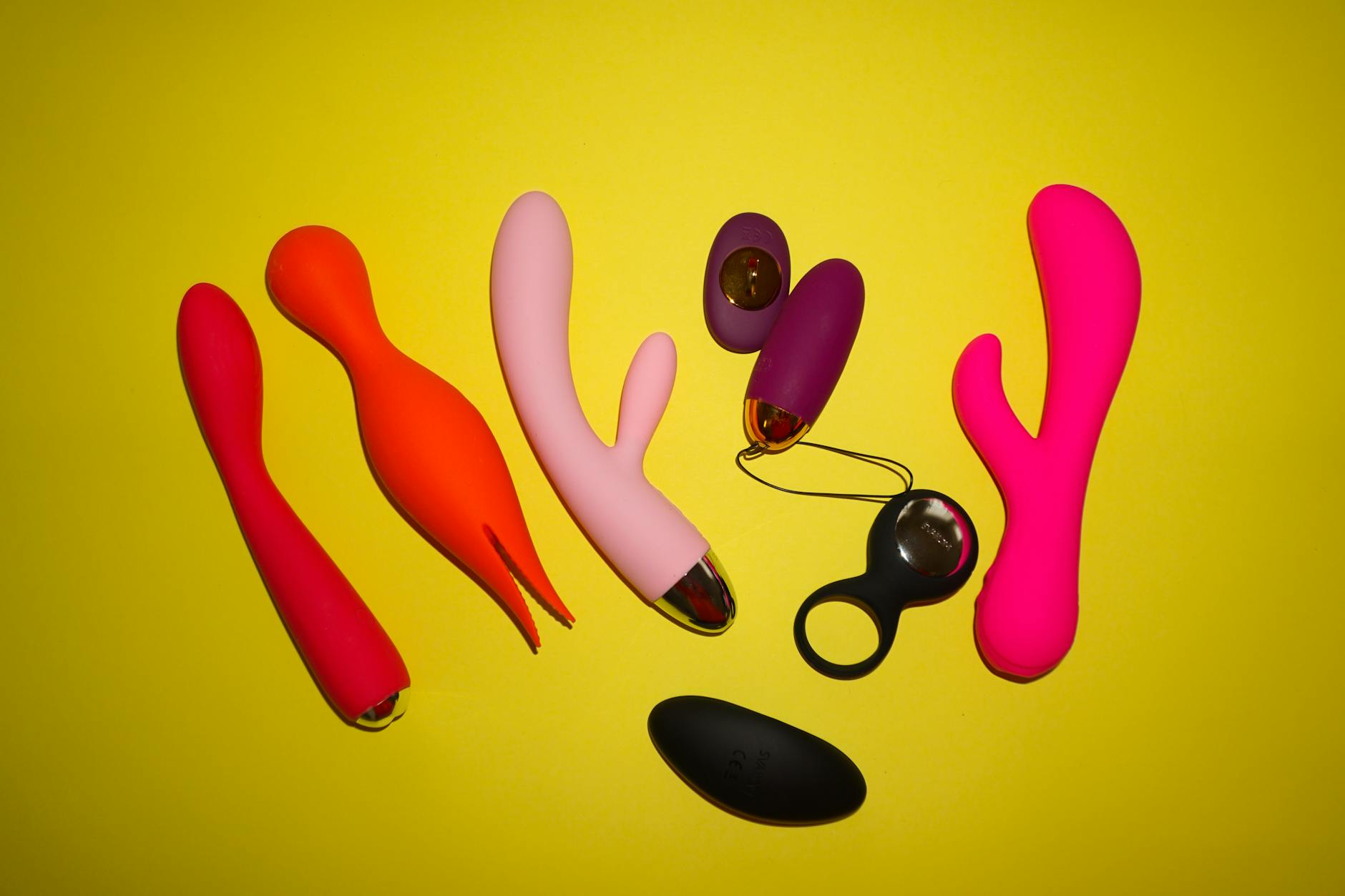
Your pleasure matters even during recovery
Here's the thing nobody tells you clearly: physical healing and sexual healing are two separate timelines. Your incisions might be closed at six weeks. Your pelvic floor might need three months. Your brain might need longer still. Understanding the difference between these three timelines is the key to returning to pleasure without anxiety or setbacks.
After gynecological surgery, childbirth, or pelvic floor injury, most people are hungry for information about when sex becomes safe. What they rarely hear is how to return to pleasure in layers. A lemon vibrator can be a helpful part of that process, but only if you understand your own healing stage first.
The three healing phases (and what each allows)
Phase 1: Immediate recovery (weeks 1-4). Your body is actively knitting tissue back together. This is not the time for any internal or external genital contact. If your healthcare provider has cleared you for shower access, gentle warm water is fine. Nothing inserted, nothing vibrating. Emotional intimacy with a partner, nonsexual touch, and conversation are your tools here.
Phase 2: Early resumption (weeks 5-8). Incisions are usually closed. Swelling has decreased. Your healthcare provider has likely cleared you for gentle penetration or external stimulation, but with strict conditions: no pressure on surgical sites, no vigorous movement, short sessions (5-10 minutes), and immediate stop if you feel sharp pain or increased bleeding. This is when some people introduce a lemon vibrator on its lowest settings, but only on external areas away from any surgical site.
Phase 3: Full recovery (week 9+). Most standard gynecological surgeries allow return to normal sexual activity by week 12. Pelvic floor rehabilitation might extend this. For hysterectomy or significant tearing, some providers recommend waiting longer. Always follow your specific clearance.
When exactly can you use a lemon vibrator safely?
Not until you have written clearance from your surgeon or gynecologist. I'm serious about this. Your healthcare provider knows your specific anatomy, the extent of your procedure, and the tissue involved. A general timeline doesn't account for individual variation.
Once you have clearance, lemon vibrators present a specific advantage over other options: the suction mechanism is gentler on healing tissue than traditional vibration. The sensation is external, not reliant on friction, and the pattern can be interrupted instantly without repositioning. But gentleness still requires precision on your part.
The practical return-to-pleasure protocol
Assume you've been cleared for external stimulation and want to reintroduce a lemon vibrator.
Week 1 after clearance. Start with the lowest intensity pattern, in short bursts. Thirty seconds on, thirty seconds off, for a total of 3-5 minutes. You're not aiming for orgasm. You're aiming for sensation recognition. Your body has been through trauma (even routine surgery is trauma). Your nervous system needs to remember that touch can feel good without triggering pain or fear.
Week 2. Increase duration to 10 minutes if there's been no increased pain, swelling, or unusual discharge. Still use the lowest pattern. Add a few seconds of slightly higher intensity if it feels right, but retreat immediately if it doesn't.
Week 3. By now you have some data about what your body tolerates. You can begin experimenting with different patterns, but keep intensity moderate. If you're in a relationship, your partner can be present (emotional support changes everything), but focus on your own sensation, not performance.
Stop immediately if you experience sharp pain (not just discomfort), increased discharge, bleeding, or a feeling of "pulling" at the surgical site. That's your body saying the tissue isn't ready. Wait a week and retry at a lower intensity.
The psychology of returning to pleasure after trauma
Your body heals faster than your mind does. Many people clear medical checkpoints at week 8 and discover their nervous system isn't ready. This is completely normal and not a failure.
After surgery or injury, your pelvic floor often develops protective tension. It's gripping. Your nervous system learned that this area means pain or discomfort, and it's trying to defend you. A lemon vibrator won't fix that on its own. Slow, voluntary relaxation does.
Before using any toy during recovery, spend 2-3 minutes lying flat, breathing slowly (inhale for 4, exhale for 6), and consciously relaxing your pelvic floor. Kegel exercises are important for long-term recovery, but during the return-to-pleasure phase, relaxation matters more than contraction. Let the muscles soften. This makes sensation possible.
Special considerations for specific procedures
After vaginal tearing or perineal repair. The perineum heals from the inside out. External suction stimulation is generally safer here than internal penetration, but stay farther forward toward the clitoris and away from the repair site. Always ask your healthcare provider which areas are off-limits and for how long.
After episiotomy. Similar to tearing, but more extensive. The same principle applies: external, away from the site, low intensity, and only after clearance. Some people resume sensation here by week 6-8. Others need longer.
After hysterectomy or myomectomy. These are abdominal surgeries. Your genitals weren't directly operated on, so external clitoral stimulation is often cleared sooner than after vaginal surgery. The limiting factor is abdominal healing and pelvic floor comfort, not the site itself.
After pelvic floor physical therapy or internal treatment. Your provider has likely massaged or needled the muscles. They're inflamed and tight. A lemon vibrator can help with sensation and gentle stimulation, but only after the acute inflammation phase (usually 48-72 hours post-treatment). Start very gently.
The role of lubrication during healing
Healing tissue is often more sensitive and less well-lubricated than pre-surgery tissue. Even though a lemon vibrator doesn't require lubrication the way penetration does, a small amount of water-based lubricant on the tip can make the sensation more comfortable, especially if your tissue feels raw or tender.
Avoid anything with fragrance, glycerin, or numbing agents during recovery. Simple water-based lubricant only. This reduces the risk of irritation on already-sensitive tissue.
When to contact your healthcare provider
If you experience pain that doesn't resolve with rest, increased swelling, unusual discharge, bleeding, or fever, contact your provider immediately. These are signs of infection or excessive inflammation, not normal healing sensations.
If you've been cleared and returned to stimulation but find anxiety is preventing arousal, that's also worth mentioning to your provider. Pelvic floor physical therapy or therapeutic work with a therapist specializing in sexual trauma can help.
The return to pleasure with a partner
If you're in a relationship, communication about the recovery timeline is essential. Many partners worry about hurting you. Many patients worry about disappointing their partner. Neither of these worries helps healing.
Instead, frame the recovery as a joint project. Your partner can be present without being active. They can offer emotional support and help monitor your comfort. They can talk about what sensation feels good and what doesn't. This kind of presence actually speeds recovery because it reduces anxiety and increases parasympathetic tone (your body's relaxation response).
When you do return to partnered intimacy, the same timeline applies: gentle, short, external-focused first. A lemon vibrator can be part of this if you both want it. But the foundation is communication, not technique.
The emotional timeline matters as much as the physical one
Your body can be ready for pleasure before your mind is. This is especially true after emergency procedures, complications, or experiences that felt traumatic. Your pelvic floor might be structurally healed while your nervous system is still in protection mode.
If you find that your body is cleared but you're still hesitant about sensation or penetration, gentle solo exploration with no goal (no pressure to reach orgasm) is often more helpful than jumping back into partnered sex. A lemon vibrator at low intensity, with no expectation of climax, can be a way to gently remind your nervous system that this area can feel good again.
Healing is not linear. You will have setbacks. They don't mean you're doing it wrong. They mean you're human and your body is complex.
People also ask
How long after childbirth can I use a vibrator? If you had a vaginal delivery with no tearing, medical clearance is typically given at 6 weeks. If you had tearing or an episiotomy, wait until at least week 8, and follow the protocol above. If you had a cesarean, external stimulation is usually safe after 6 weeks, but always confirm with your OB. Some providers recommend waiting until 12 weeks for internal contact after cesarean delivery.
Is it normal for orgasms to feel different after surgery? Yes. Your tissue anatomy has changed slightly. Your pelvic floor tension is different. Your nervous system has been through stress. Orgasms might feel softer, more localized, take longer to build, or feel entirely new. This usually normalizes over 2-3 months as tissue remodels and your nervous system settles.
Can I use a lemon vibrator internally after pelvic floor surgery? Only with explicit clearance from your pelvic floor physical therapist or surgeon. Internal procedures require different timing than external surgery. Ask specifically about vibration versus non-vibrating contact, and follow their timeline precisely.
What if I have pain during stimulation after I've been cleared? Stop. Pain is information. It might mean the tissue isn't ready, even though your provider said it was. It might mean you need more relaxation work. It might mean you're moving too fast emotionally. Contact your provider if pain persists. Pelvic floor physical therapy can also help you distinguish between normal sensation and true pain.
Is it okay to use a lemon vibrator if I have scar tissue? Yes, but carefully. Scar tissue can be sensitive or numb. External stimulation is safer than internal contact on scar tissue. Start extremely gently. You might feel unusual sensations as the nerve endings in scar tissue rewire themselves (this is normal). If you experience persistent pain, discuss scar tissue therapy with your physical therapist.
How do I know when I'm really ready to return to normal sexual activity? You're ready when you have medical clearance, you can use external stimulation without pain, you feel desire (not just clearance), and you feel emotionally safe. Desire is the most often-missed piece. You can be physically healed and not ready. That's not a problem. It's information about your nervous system's timeline.
The path forward
Recovery from pelvic injury or surgery is not linear. You'll have days when everything feels fine and days when a light touch makes you tense. This is normal. Your nervous system is recalibrating. Your tissue is remodeling. Your relationship to your own body is reforming.
A lemon vibrator can be a helpful tool in this process, but it's not the main event. The main event is your body learning that pleasure is possible again. That healing is possible. That you're not broken. Once you genuinely believe those things, the vibrator just makes the experience better.
Start slowly. Follow your clearance strictly. Listen to your body's feedback, not just your mind's timeline. And know that most people return to full, satisfying pleasure after recovery. Your nervous system has a remarkable capacity to heal. You just have to give it the right conditions and the patience it deserves.