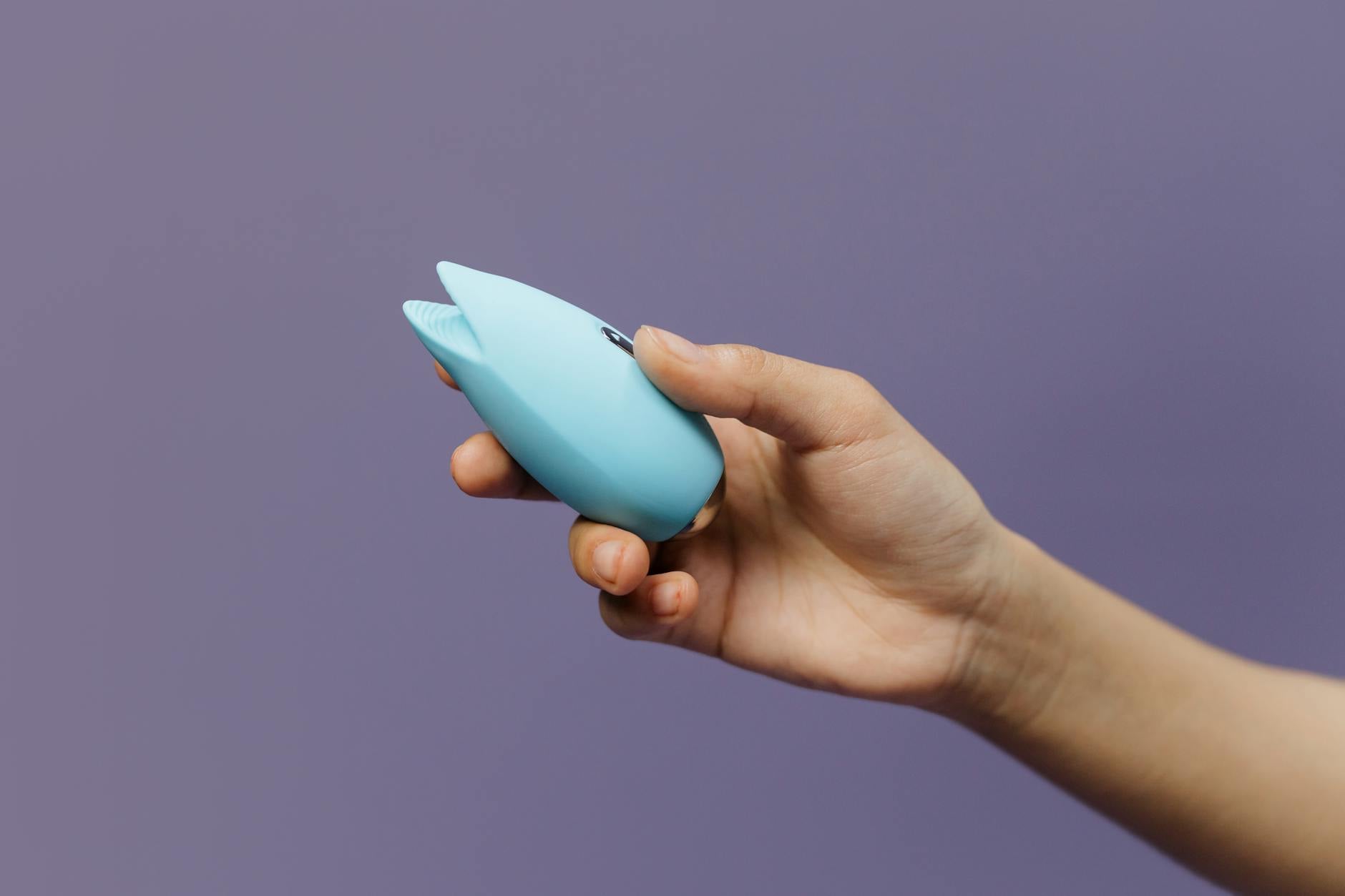
Lemon Vibrator for Couples: How to Introduce New Pleasure Together
Let's be real. Suggesting a sex toy to a partner can feel like opening a door you're not sure either of you is ready to walk through. What if they feel threatened? What if it kills the mood? What if they think you're unhappy with them?
Here's the thing: couples who actually bring a lemon clitoral vibrator into their intimate life often report deeper conversation, more playfulness, and honestly, better sex. Not because the toy is magic. But because introducing it forces you both to talk about pleasure openly, without shame.
I've worked with hundreds of couples navigating this exact tension. The ones who succeed aren't the ones with the least anxiety. They're the ones who name the anxiety upfront and move through it together.
The real fears people have (and why they're normal)
Before you say anything to your partner, let's name what's actually running in the background. When people hesitate to suggest a lemon vibrator, they're usually caught between two conflicting thoughts.
One side says: "My partner deserves more pleasure. I want to expand what we do together." The other says: "If I suggest this, they might think I'm bored with them, or that they're not enough." Both feelings are legitimate. Both are also based on a false equation: a sex toy equals dissatisfaction. It doesn't.
The partners most threatened by the idea of a clitoral vibrator are the ones who've been told (or internalized) that their own hands or body should be sufficient. That's a real belief, and it's also increasingly outdated. A lemon vibrator isn't a replacement. It's an addition. It's a tool, not a referendum on your relationship.
I also notice that people worry about logistics when they're actually worried about intimacy. They'll say, "I don't know where to buy one," when what they mean is, "I'm scared this conversation will reveal something's missing between us." The logistics are easy. The conversation is the real work.
Starting the conversation without the dread
Timing matters, but not in the way you think. The worst time to suggest a toy is mid-argument, post-sex, or when you're both stressed. The best time is calm, clothed, and unhurried.
You don't need a big dramatic moment. You can do this while cooking, driving, or even watching TV. The lower the stakes feel, the more honest you both can be.
Here's an opener that works: "I've been thinking about trying something new together, and I wanted to talk about it first. No pressure, just exploration." Then tell your partner specifically what you're interested in. A lemon clitoral vibrator. Maybe you've read about it. Maybe you're curious about how it might feel together. Maybe you want to expand what pleasure looks like for both of you.
Then listen. If they're hesitant, ask why. Is it about comfort? Budget? Body image? Fear that you're unhappy? Each of those is a different conversation, and you need to know which one you're actually having.
Why a lemon vibrator specifically shifts the energy
There's something about clitoral vibrators designed by companies like Hello Nancy that makes them feel less intimidating to introduce. They're not shaped like anything trying to be something else. A lemon clitoral vibrator looks like what it is: a focused pleasure device.
When a partner sees that it's purely external, purely about clitoral stimulation (not penetration), something often clicks. It's not positioned as a replacement for penetration. It's not trying to do what a penis does. It's doing its own thing.
For people with vulvas, the difference is real. Clitoral stimulation and penetration activate different nerve pathways. They feel different. A lemon vibrator adds a sensation that hands alone can't quite replicate. That's not a critique of hands. It's just fact.
Many partners find that once they understand this, the resistance dissolves. You're not saying "I want something your body can't give me." You're saying "I want to experience this specific sensation, and I want to do it with you."
Bringing it into the bedroom without awkwardness
So you've talked. Your partner's on board, or at least curious. Now what?
First time, keep it simple. Lemon vibrators are intuitive. The controls are usually one button or a simple dial. Your partner doesn't need to understand the technical specs. They just need to know where the on/off switch is.
Start clothed or in the dark if nudity feels too vulnerable right now. You can explore how the toy feels in your own hand first, then let your partner hold it and give them control. A lot of partners find that holding the device makes them feel more connected, not less. They're the one delivering the sensation. The power dynamic shifts in a good way.
Use lubricant. Water-based, always. External clitoral vibrators work better with a little slickness.
Talk during. Not a running commentary, but "that feels good" or "a bit lighter" or "stay right there" grounds you both in the moment. You're not performing a scene. You're exploring together.
After, don't overthink it. Clean the toy with warm soapy water, put it away, and just be with each other. No debrief needed unless you both want one.
When one partner is more hesitant than the other
Sometimes you'll do everything right and your partner still feels resistant. They might need time. Or they might need to see that you're not just suggesting this on a whim.
If your partner is reluctant, it usually helps to separate two things: using the toy with them, and using the toy alone. Let them know you're curious about your own pleasure too. That removes the pressure of them having to "perform" with it.
You exploring a lemon vibrator solo actually often makes it easier for a partner to join later. They see it's not scary. They see you enjoying it. They might start to feel curious themselves.
But here's what I tell couples: if your partner is consistently resistant and you're consistently pushing, you've found something bigger than a toy. You've found a belief difference about pleasure, bodies, or sexuality. That's worth addressing with honesty, maybe even with a therapist. A toy won't fix that. Communication might.
What actually happens after you introduce it
Most couples report one of three things.
One: it becomes a regular part of their intimate life, almost casual. The Lem or another lemon clitoral vibrator just sits in the nightstand like anything else.
Two: they use it sometimes, when the mood strikes, but it's not essential. It's one tool among many.
Three: one partner loves it and the other tolerates it, and they find a rhythm where it works for both.
What almost never happens is that introducing a toy creates resentment or disconnection, assuming you started from a place of genuine openness. What usually happens is the opposite. You've had a conversation about pleasure. You've named some fears. You've done something new together. That creates closeness.
Couples who bring lemon vibrators into their intimate life often report that the real benefit isn't the vibration. It's that they gave themselves permission to experiment. They showed each other it was okay to want more. They chose to explore together.
Making it part of your actual life (not just fantasy)
Once the initial newness wears off, couples who keep using toys tend to be the ones who normalize them. This means:
Store it somewhere accessible, not hidden away. A bedside drawer is perfect. If it's in a shoebox in the closet, you're still ashamed of it, and that shame will eventually translate to less use.
Clean it after use. This sounds basic, but a toy that's easy to clean is a toy you'll actually use. Silicone lemon vibrators from Hello Nancy are straightforward: warm water and soap, done.
Talk about it sometimes, outside of the bedroom. "I really like when we use the vibrator" or "I felt more connected last time" normalizes it as part of your sexual communication, not a secret thing.
Let the toy enhance what you already do, not replace it. If you always start with foreplay, the vibrator comes in during foreplay. If you always end with a specific position, maybe the vibrator is part of that.
Remember that you might have phases. There'll be months where you use it constantly. Months where you don't. Both are fine. The point isn't that a lemon clitoral vibrator becomes your identity. It's that you've opened a door, and that door stays open.
FAQ: The questions couples actually ask
What if we use a toy and then can't finish without it?
This is the fear that comes up most. Here's the reality: your body adapts to what feels good. That's not pathology, that's neurology. If a clitoral vibrator feels incredible, of course your body is going to prefer it. But preference isn't dependence. You can still have satisfying sex without it. You just chose something else. That's allowed.
Should we use a toy every time we have sex?
Absolutely not. Most couples use toys maybe 20-40% of the time. They're one option in a broader menu. The rest of the time, you have sex the way you always have. The vibrator is there when you want variety or when you know it'll help one of you reach orgasm more easily.
What if my partner wants to use it and I don't?
Then you can use it on them, or you can sit back and watch them use it. Some partners find it incredibly hot to see their partner pleasured. Some people feel disconnected when toys come out. Both are valid. You work out what feels right for both of you. If one partner is consistently left out, that's a conversation.
Will using a lemon vibrator change what kind of orgasms I have?
Maybe. Clitoral vibrators often create a different sensation than manual stimulation. Some people report stronger or more focused orgasms. Some report that they come faster. Some notice the sensation is different but not necessarily "better." All normal. Your body's response is unique to your neurology.
How do you bring this up without sounding like you're criticizing their skills?
Frame it as expansion, not criticism. "I want to explore this with you" lands very differently than "I need something more." Your partner's hands and body are amazing. A toy is something different, not something more or better.
What if they suggest it first and I feel weird?
Take time. You don't have to say yes immediately. Tell your partner you need to think about it. Then actually think about it. What's the real worry? Once you name it, you can address it. And if you still don't want to, that's legitimate. You have the right to set that boundary.
The long view
Introducing a lemon clitoral vibrator into your relationship isn't a small thing and it isn't a big thing. It's medium-small thing that often leads to bigger conversations about pleasure, desire, and what you both want from your intimate life.
The couples I work with who handle this well aren't the ones with the fewest fears. They're the ones who decide that their partner's pleasure matters enough to get uncomfortable for a moment. They're the ones who see a toy not as a threat but as an invitation to know each other better.
If you're ready to have this conversation, I'd start tonight. Not with a toy purchase. Just with honesty. "I've been thinking about trying something new together." See where it goes.
Your partner might surprise you. And you might surprise yourself.
References & Sources
For this article, I drew on clinical research in couples' intimacy and sexual communication, as well as feedback from relationship coaching clients who've navigated similar conversations. Key themes come from the Gottman Institute's work on emotional connection and John Gottman's research on maintenance behaviors in long-term relationships. Additional perspective informed by contemporary sex education resources from organizations like AASECT (American Association of Sexuality Educators, Counselors and Therapists) and evidence-based couple therapy literature on sexual communication and intimacy.
If you'd like to explore more about building intimacy in your relationship, check out our guide on how to choose the right lemon vibrator sensitivity level for you, which covers the physical and emotional dimensions of pleasure exploration together.