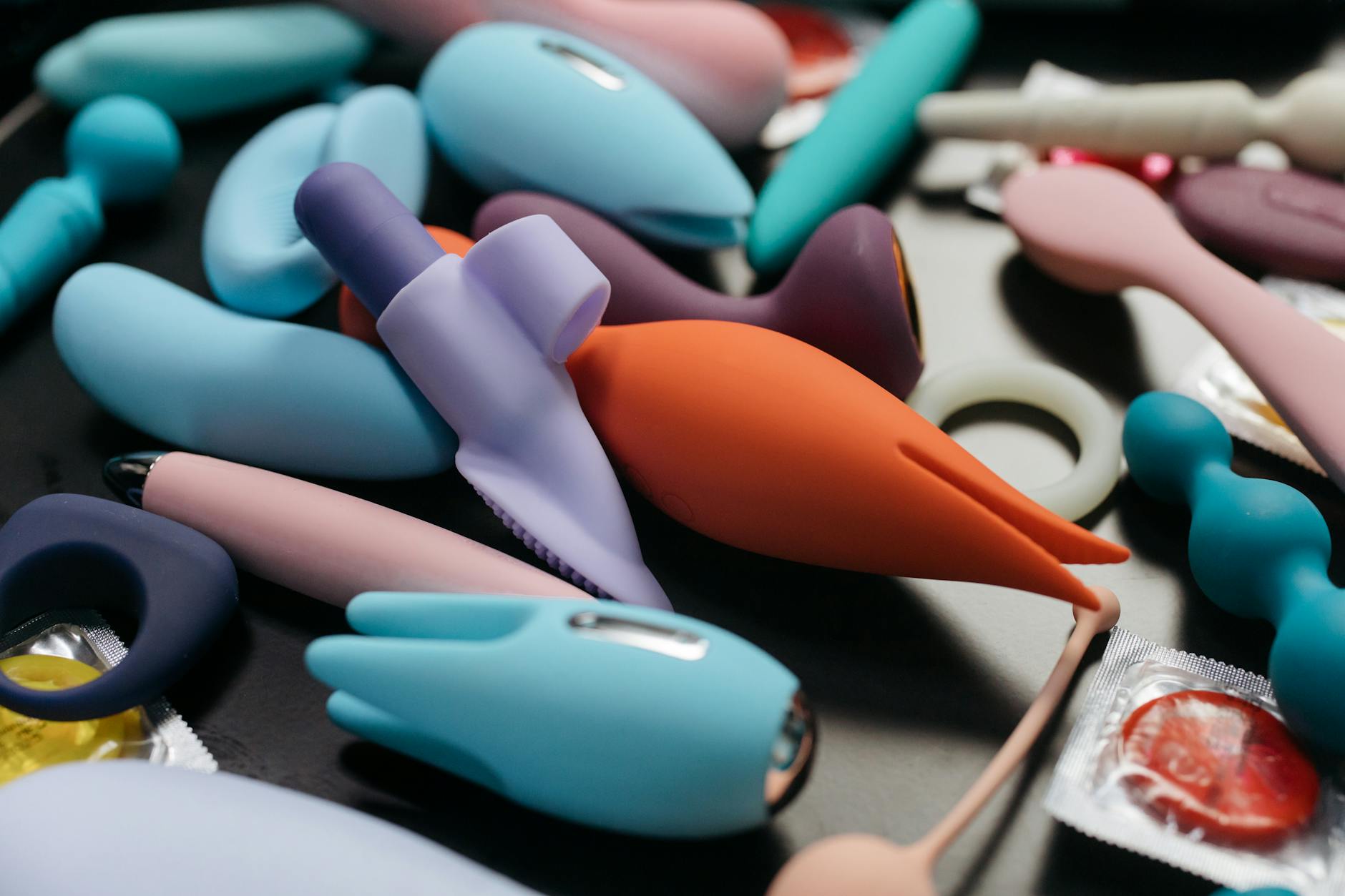
Here's what anxiety actually does to your body
You already know anxiety kills mood. But here's what's happening underneath. When your nervous system detects a threat, real or imagined, it triggers the sympathetic response. Blood flow diverts away from your genitals and toward your limbs. Your heart rate spikes. Your pelvic floor clenches. Arousal becomes impossible because your body is literally in fight-or-flight mode.
The frustrating part? This happens whether the threat is real (a work deadline) or perceived (a thought loop about whether you're "normal"). Your body doesn't know the difference. And once anxiety has its grip, willpower and desire don't matter. No amount of mental enthusiasm overrides a nervous system that's decided you're not safe.
That's where lemon vibrators come in. Not as a fix for anxiety itself, but as a tool that helps you bypass the stuck place and reconnect with sensation when your nervous system won't cooperate.
Why lemon clitoral vibrators work differently when you're anxious
Most vibrators require you to be at least partially aroused before they feel good. They need some baseline blood flow, some openness. When anxiety has you locked down, those don't exist.
Lemon sexual toys, with their suction technology, work on a different principle. Suction stimulates nerves directly without requiring you to be in an aroused state first. This matters enormously when anxiety is present. You're not waiting for desire to build. You're creating a sensation that the nervous system registers as safe and pleasurable, which then allows arousal to follow.
It's a gentle reversal. Instead of arousal leading to stimulation, stimulation can lead to arousal.
The nervous system reset protocol
When anxiety is blocking you, a lemon vibrator works best within a specific framework. Here's what actually helps.
Start grounded, not optimistic. Don't lie down expecting desire to appear. Instead, sit upright, feet on the ground, maybe with a blanket you like. The position matters because it keeps your nervous system slightly alert in a good way. You're not vulnerable, you're present.
Begin at the lowest setting. On the Lem vibrator, this means starting at pattern 1. The goal is not pleasure yet. The goal is noticing sensation without judgment. Anxiety lives in the gap between what you expect to feel and what you actually feel. By setting expectations very low, you eliminate that gap.
Give yourself a full 10 to 15 minutes at low intensity. This isn't foreplay. This is nervous system recalibration. Your body is learning that touch is safe and that pleasure can exist without urgency. Slow rewires faster than pushing.
The role of breathing and attention
Anxiety thrives when your attention is scattered. One part of you is touching yourself, another part is monitoring whether you're "getting there," another part is worried about getting interrupted. Your nervous system is split across three dimensions.
Lemon vibrators are most powerful when paired with focused attention. This means: as you use it, consciously bring your focus to the sensation. Not to whether you're going to orgasm. Not to whether your body is responding "right." Just to what you actually feel.
Pair this with grounding breath work. Inhale for four counts, exhale for six. The longer exhale activates your parasympathetic nervous system, the one that allows relaxation. Do this while using a lemon clitoral vibrator and you're giving yourself two signals at once: my body is safe, my nervous system can downshift.
What happens after the initial reset
Once you've used a lemon vibrator this way a few times, your nervous system starts to recognize the pattern. Touch plus suction plus grounding plus low stimulation equals safety. Arousal often follows, sometimes during, sometimes later.
This is when you can gradually increase intensity. Move from pattern 1 to 2 or 3. Let your body find what feels right. But don't push this. If anxiety returns, you've gone too fast. Go back to the low, slow version.
Many people find that after a few weeks of this practice, their baseline anxiety around sex drops dramatically. Not because the lemon vibrator is magic, but because you've repeatedly shown your nervous system that pleasure is accessible even when you're not perfectly calm.
When anxiety is tied to trauma or deeper patterns
If your anxiety around sex is severe, rooted in past trauma, or linked to intrusive thoughts, a vibrator alone won't solve it. You need to work with someone. A trauma-informed therapist or sex therapist can help you understand what your nervous system is protecting you from and build genuine safety.
But many people find that lemon vibrators are an essential part of their healing toolkit alongside therapy. They're a place to practice the nervous system skills you're learning in sessions. They're proof, in your body, that pleasure is possible.
The permission piece
Here's something I see constantly in my practice: anxiety about pleasure is often really anxiety about permission. You don't feel allowed to slow down, to prioritize sensation, to spend 15 minutes on something that doesn't produce an orgasm.
Using a lemon vibrator slowly and deliberately is an act of permission. You're telling yourself that your nervous system's needs matter. That sensation for its own sake is valuable. That you don't have to earn pleasure by performing a certain way.
That permission is half the healing.
FAQ
How long does it take before a lemon vibrator feels good when anxiety is blocking arousal?
This varies, but most people feel a shift within three to five sessions. You might not experience pleasure immediately, but you'll notice a decrease in tension, a slight release. True pleasure often takes longer, sometimes weeks. Your nervous system is learning a new pattern. That takes time. If nothing has shifted after a month of regular use, it's worth consulting a therapist to ensure there isn't a deeper issue at play.
Can using a lemon clitoral vibrator actually reduce baseline anxiety over time?
Not directly. A vibrator won't cure generalized anxiety disorder or panic disorder. But yes, it can reduce anxiety specifically around sex and intimacy. When you repeatedly experience pleasure in your body, your brain gradually stops associating touch with threat. This is especially true if you pair vibrator use with other nervous system practices like breathing, meditation, or yoga. The combination is more powerful than the tool alone.
What if I feel more anxious when I start using a lemon vibrator?
This happens and it's worth paying attention to. Sometimes sensations that feel foreign can trigger anxiety even if they're objectively pleasant. If this is you, slow way down. Use the lowest setting for just two to three minutes. Add more grounding (both feet flat, hand on heart). If anxiety persists or intensifies, take a break. This might signal that you need more direct support from a therapist before vibrator use feels manageable.
Is there a specific lemon sexual toy that's best for anxiety-based arousal block?
The Lem vibrator is designed with suction that feels less invasive than traditional vibration, which many anxious people find more accessible. The range of intensities also matters. You want something with a very low starting point so you can ease in. That said, the tool is secondary to the practice. How you use it matters more than which model you choose.
Can my partner use a lemon vibrator on me if anxiety is my issue?
Yes, but with caveats. Having someone else control the sensation can feel threatening if anxiety is present. You lose control of the pace and intensity. If you do want partner involvement, set clear agreements first: they start at the lowest setting, follow your verbal cues exactly, and stop immediately if you ask. Many people find it easier to practice alone first, then introduce a partner once they've rebuilt their own sense of safety.
Will a lemon vibrator help if my anxiety is about being watched or judged during sex?
Partially. A vibrator can help your body re-learn that touch is safe, which is foundational. But if your anxiety is specifically about being watched or judged, the vibrator alone won't address that. You also need to work on the relational or cognitive piece, either with a partner or a therapist. The vibrator creates a safe physical experience; you need other tools for the emotional components.
The real work
Using a lemon vibrator when anxiety is blocking arousal isn't about forcing pleasure. It's about creating conditions where your nervous system can relax enough to feel something. Over time, that something becomes more and more available. But it requires patience with yourself and consistency. You're rewiring a pattern, not flipping a switch.
If you're struggling with anxiety around sex or intimacy, consider reaching out to a therapist or counselor who specializes in this area. A combination of professional support and tools like lemon clitoral vibrators gives you the best shot at rebuilding your relationship with pleasure. You deserve that reconnection.