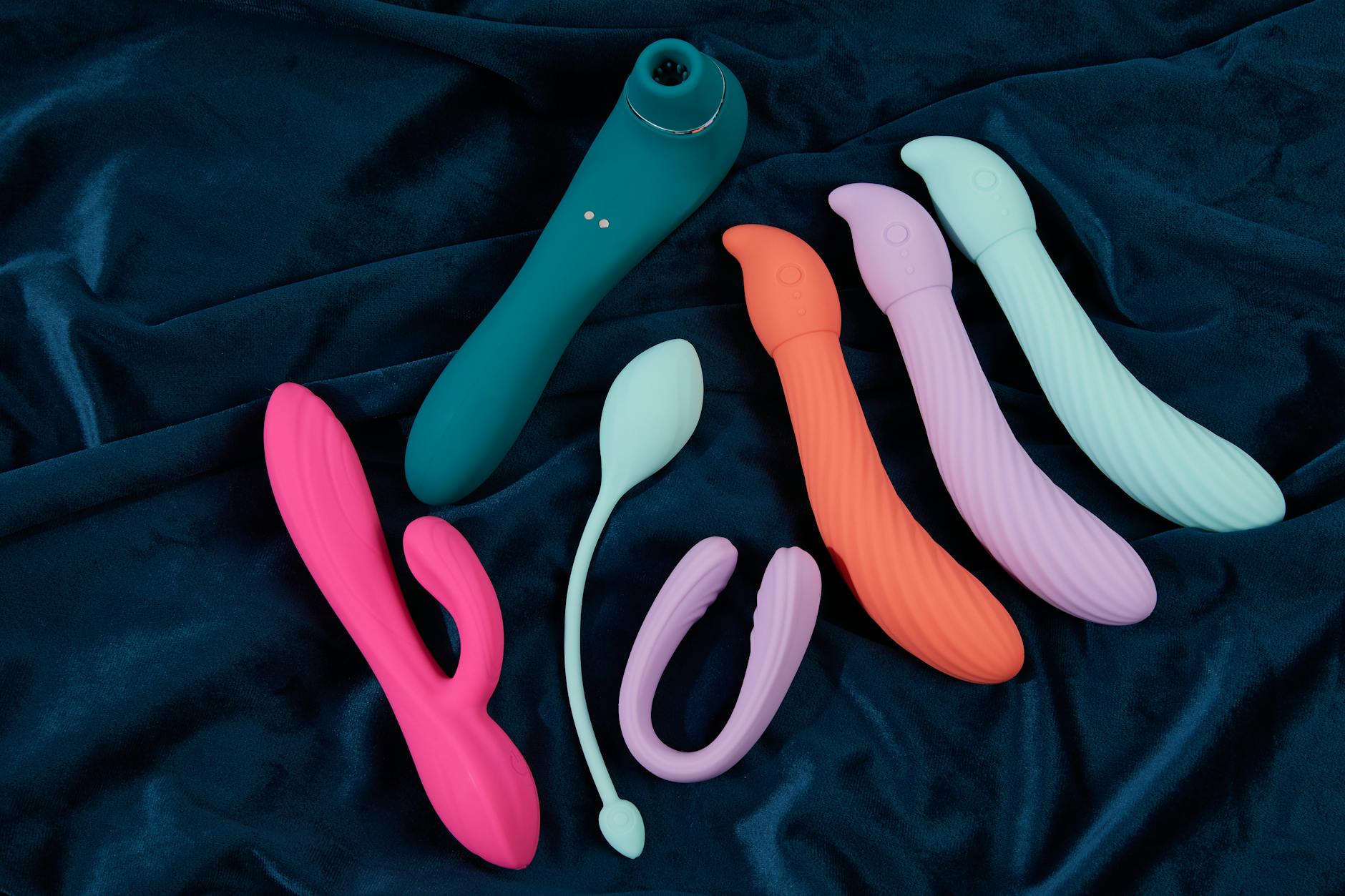
The conversation nobody's having
Performance anxiety in the bedroom doesn't come from malice or lack of attraction. It comes from this impossible math: the belief that your partner's pleasure depends entirely on what you can do, minus the knowledge that pleasure is wildly unpredictable, plus the pressure that you should somehow know what works. The result? Most people with performance anxiety stop trying at all, which leaves both partners stuck.
Here's what I see in my practice: couples where one person has performance anxiety often stop having sex altogether rather than face the cycle of pressure, disappointment, and shame. A lemon vibrator like the Lem isn't a fix. It's a reset button. It removes the equation entirely.
Why performance anxiety actually gets worse with traditional toys
Most vibrators require external control. If your partner is holding a standard vibrator, the anxiety logic goes like this: "I'm not able to make this happen on my own, so I need to use a tool, which means I've failed." It reinforces the exact fear that's preventing pleasure in the first place.
A clitoral suction toy changes the dynamic completely. Instead of replacing your partner's effort, it supplements sensation in a way that makes pleasure possible again. The person experiencing the vibration is in control of how it feels. Your partner isn't proving themselves through the vibrator. They're creating conditions where pleasure can happen.
That's a fundamentally different conversation.
The reframe your relationship needs
Before you even mention a lemon vibrator, you need to agree on what this actually means. Performance anxiety thrives in silence, so start here:
"I love you, and I want us both to feel good. Right now, the pressure we've both internalized is preventing that. I'm not suggesting this because something's wrong with you. I'm suggesting it because I want us to get back to enjoying each other without keeping score."
That's the foundation. Everything else builds on it.
Then, introduce the tool with clarity. A lemon clitoral vibrator isn't a replacement for your partner's touch. It's not a sign that they're not enough. It's a way to access sensation that anxiety has been blocking. Many couples find that once the pressure lifts, they reconnect in other ways too.
How to actually use it together
Start small. This isn't about diving into simultaneous penetration and vibration. This is about rebuilding comfort.
First session: Just use the vibrator solo while your partner is present. Not performing. Just there. Reading in bed, or sitting nearby, or even just knowing it's happening in the next room. The point is to decoupling pleasure from obligation. Your partner gets to see that arousal and orgasm can happen without their involvement being central. That's the anxiety killer right there.
Second session: They might hold the vibrator while you guide it. This gives them something to do that's genuinely helpful rather than performative. They're not trying to make you come. They're holding a tool you're directing. Notice the difference in the framing. One is collaborative. One is a test they might fail.
Third session and beyond: Use the lemon vibrator as foreplay. Your partner touches you, then you add the vibrator. Then back to touch. The vibration becomes part of the texture of intimacy, not the main event. This is where performance anxiety really starts to dissolve, because the expectation shifts from "I need to make this person come" to "we're exploring sensation together."
The conversation starters that actually work
Don't lead with the vibrator. Lead with honesty.
"I've noticed we've stopped being intimate, and I think it's because we're both in our heads about it. I don't want that."
"I want you to know that I don't expect you to perform. I want us to enjoy each other again."
"What if we took pressure off for a while and just explored what feels good, without trying to prove anything?"
These open the door. Then, when it feels natural, you can say something like: "I read about lemon clitoral vibrators for couples dealing with this exact thing. They're supposed to take the pressure off because you're not trying to make it happen. You're just creating the conditions for it to feel good."
If your partner is resistant, don't push. Resistance often means the real conversation hasn't happened yet. Spend more time on the anxiety conversation before the toy conversation.
What not to do
Don't surprise them with it. Don't frame it as a fix for their inadequacy. Don't use the vibrator to try to convince them they're wrong about what they believe about themselves. Don't make it weird by pretending this is totally normal and no big deal. It's a vulnerable moment. Acknowledge that.
Don't use it to avoid the real conversation about what's actually driving the performance anxiety. Sometimes it's past rejection. Sometimes it's internalized ideas about what masculinity or femininity should look like during sex. Sometimes it's previous partners or criticism. The vibrator helps once that conversation has happened, not instead of it.
What happens after
When performance anxiety starts to lift, something else often surfaces: reconnection. Couples tell me that using a lemon vibrator together actually made them feel closer, not more distant. Why? Because they're on the same team again instead of playing opposing sides of the anxiety spiral.
Some couples find that once the vibrator has served its purpose, they don't use it as much. Others integrate it permanently. Both are fine. The point was never the vibrator. The point was getting back to a place where pleasure felt possible.
Your partner's pleasure matters, yes. But so does yours. And the belief that one person can single-handedly create another person's pleasure is a trap. The lemon vibrator is a way out of that trap.
People also ask
Will using a vibrator make my partner feel replaced or inadequate?
Not if the conversation happens first. The tool doesn't replace them. It removes the pressure they've been carrying. In my experience, partners often feel relief. They get to stop performing and start connecting. That's better for both people.
How do I bring this up without making it seem like a criticism?
Frame it as a problem you're solving together, not a problem your partner is. "We've lost our connection and that's affecting both of us. I want to try something that might take the pressure off so we can get back to enjoying each other." That's collaborative. "You're not good at this" is not.
Can you use a lemon clitoral vibrator if one partner has erectile dysfunction?
Absolutely. In fact, many couples find that introducing a vibrator actually helps with ED because it removes the pressure to perform penetratively. The focus shifts to mutual pleasure instead of one person's capability. This is where couples often rediscover intimacy they thought was gone.
What if my partner thinks wanting to use a vibrator means I'm not satisfied?
That's a separate conversation that might need a therapist to mediate. But here's the truth: pleasure isn't a fixed pie. Your satisfaction doesn't diminish theirs. A vibrator doesn't mean you're rejecting your partner. It usually means you want more of them, not less. Sometimes people with performance anxiety need to hear that from someone neutral.
How long before we stop needing the vibrator and things "go back to normal"?
There is no going back to normal. Normal was broken by anxiety. What you're building now is better. Some couples use a lemon vibrator occasionally. Some use it frequently. Some find they don't need it anymore once the anxiety has lifted. All of these are healthy outcomes. The vibrator isn't a crutch. It's a bridge.
Should we use the vibrator every time or just sometimes?
Let pleasure guide you, not habit. If it feels good and connected, use it. If you're both content without it, don't. The goal isn't to develop a dependence on a toy. The goal is to rebuild pleasure and trust. The vibrator is just the tool that makes that possible.